Đà Nẵng
As the pulsating heart of Central Vietnam, Đà Nẵng seamlessly blends coastal beauty with rapid modern innovation and urban grace.
Meaning
The name Đà Nẵng derives from the ancient Chamic language. The word Dak means water or river, and Danang means large or wide. Together, it translates to Big River or Opening of the Large River, referencing the vast Han River estuary.
Origin
Before becoming a bustling Vietnamese metropolis, the area was a vital seaport of the ancient Champa Kingdom. The Chamic people named the region for its expansive river estuary, a critical feature for maritime trade. By the 16th century, as the nearby port of Hội An began to decline, Đà Nẵng emerged as the primary deep-water seaport in Central Vietnam. The French later called it Tourane during the colonial era, but it reclaimed its historical name after independence. Today, the name stands as a linguistic bridge to the region's diverse ancient heritage.
Cultural Significance
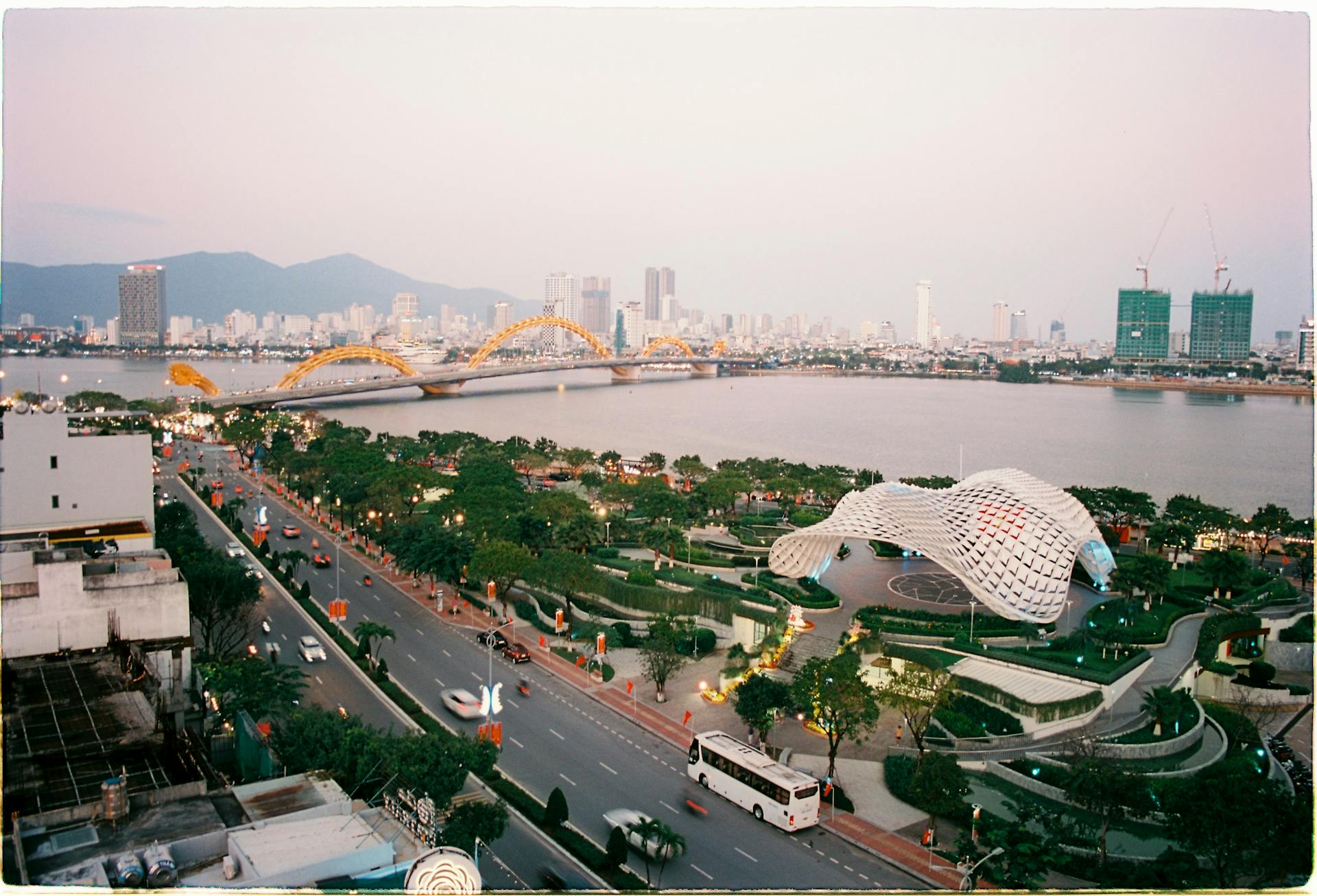
Đà Nẵng is affectionately known nationwide as the City of Bridges, boasting spectacular architectural marvels like the Dragon Bridge, which literally breathes fire and spits water every weekend. Unlike other major Vietnamese cities known for frantic traffic, Đà Nẵng is celebrated for its clean streets, strict environmental policies, and a distinct culture of extreme hospitality. It is often cited as the model city for Vietnam's future.
PRACTICE: Đà
To pronounce the Vietnamese 'd', start with the sound of the English 'd' in 'dog,' but press your tongue more firmly against the roof of your mouth just behind your upper teeth. Release it with a sharp, quick burst of air to achieve the correct, crisp sound.
Open your mouth wide to make a clear "ah" sound, similar to the "a" in "father" or the sound you make when a doctor asks you to say "ah."
To produce this low-falling tone, start your voice at a low pitch and let it drop even further, mirroring the sound of a gentle, relaxed sigh of disappointment.
PRACTICE: Nẵng
Like the 'n' in the English word 'now'.
Pronounce this sound by making a very short "ah" vowel, then immediately closing your throat with a strong, nasal "ng" sound, as if you are abruptly cutting off the word "ah-ng."
To produce this rising, broken tone, start your voice at a mid-to-high pitch, let it rise slightly, then perform a quick "catch" or tiny hiccup in your throat before jumping to a higher pitch. It should sound similar to the sharp, inquisitive rise of a surprised "Huh?".
EXAMPLES
Đà Nẵng có nhiều bãi biển đẹp.
Đà Nẵng has many beautiful beaches.
Tôi sẽ đi Đà Nẵng vào tháng 5.
I will go to Đà Nẵng in May.
WHAT TO AVOID
Many English speakers pronounce 'Đà' like 'Day' or 'Dah' without the low pitch. For 'Nẵng', learners often forget the 'ng' at the end or treat the 'tilde' tone like a flat rising question, missing the characteristic 'hiccup' or break in the voice found in Northern speech.