Cơm tấm
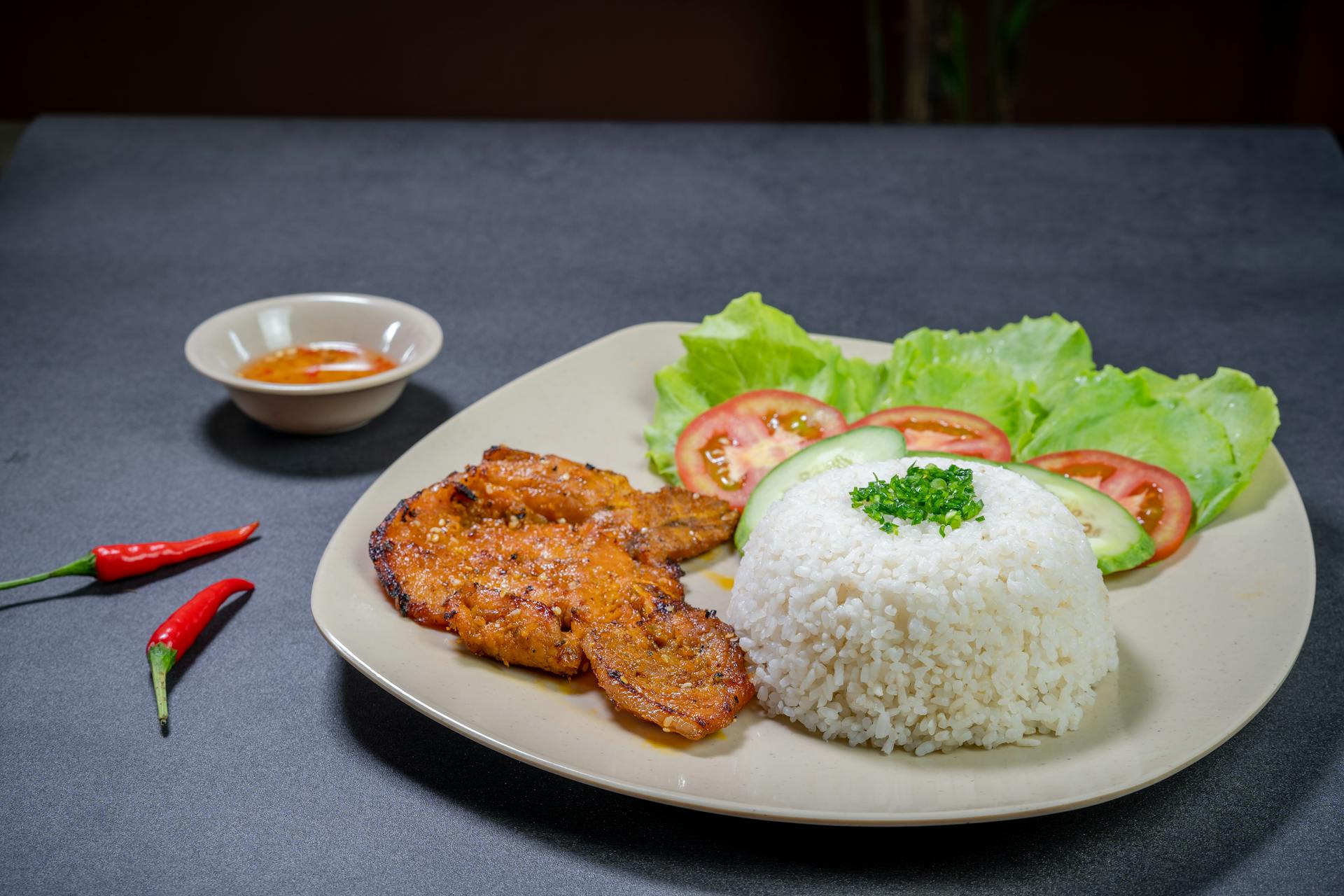
As the culinary heartbeat of the south, Cơm Tấm transforms humble broken rice into a masterpiece of texture and smoky flavor.
Meaning
'Cơm' means cooked rice, and 'tấm' refers to the fractured, broken fragments of rice grains that occur during the milling process. Together, the phrase literally translates to 'broken rice'.
Origin
Historically, broken rice was considered inferior and hard to sell, so rice farmers in the Mekong Delta kept it for their own consumption. During Vietnam's rapid urbanization in the early 20th century, laborers flocking to Saigon needed hearty, affordable meals to sustain them through long shifts. Street vendors began serving 'cơm tấm' with rich proteins like grilled pork and egg meatloaf to keep the workers fueled. Over time, various cultural culinary influences shaped its accompaniments, elevating it from a peasant dish to a beloved urban staple.
Cultural Significance
In modern Saigon, the smell of grilling pork chops serves as an olfactory clock, wafting through alleyways as early as 5 AM. While traditionally a breakfast dish for the working class, 'cơm tấm' is now deeply ingrained in the culture and enjoyed at any hour, from upscale air-conditioned restaurants to midnight street carts. A true Saigonese evaluates a stall not just by the quality of the meat, but by the sweet-savory balance of its fish sauce and the rich aroma of its scallion oil.
PRACTICE: Cơm
Produce this sound like the "k" in "skill," making sure to keep it crisp and tight without releasing a puff of air.
A relaxed 'uh' sound like the 'a' in 'about', followed by closing your lips completely for the 'm'.
Maintain a steady, flat, and level pitch throughout the word, keeping your voice relaxed and stable without letting it rise or fall.
PRACTICE: tấm
To produce this sound, tap the tip of your tongue firmly against the back of your upper teeth and release quickly, much like the crisp 't' in the word "stop" or the 't' in "star." Ensure the sound is sharp and dry, with minimal air escaping as you pronounce it.
A very short 'uh' sound like the 'u' in 'up', ending by closing your lips tight for the 'm'.
To master this rising tone, start at a medium pitch and quickly slide your voice upward, just as you would when asking a surprised or urgent question like "What?" or "Huh?".
EXAMPLES
Tôi muốn ăn cơm tấm.
I want to eat broken rice.
Cơm tấm là món ăn của Sài Gòn.
Broken rice is a dish of Sài Gòn.
WHAT TO AVOID
English speakers often add a puff of air to the 'c' and 't' sounds, making them sound like 'kh' or 'th'. Another common mistake is pronouncing 'cơm' like the English word 'comb', which has a different vowel sound. Ensure you close your lips fully at the end of both words for the 'm' sound.