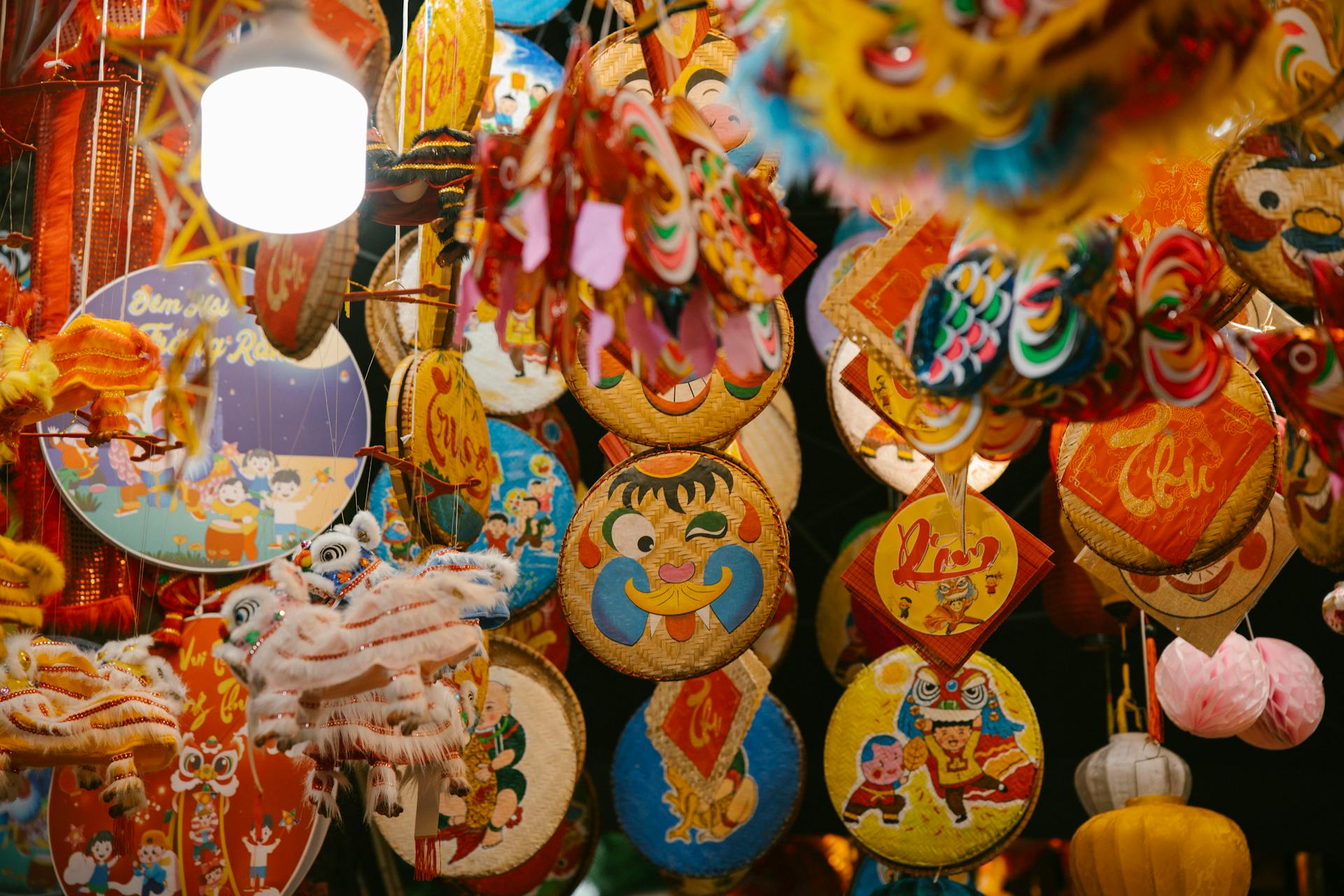
Tết
Tết serves as the spiritual heartbeat of Việt Nam, marking the arrival of spring with family reunions and fresh starts.

Meaning
Derived from the word 'Tiết' (solar term), Tết is the short name for Tết Nguyên Đán, known as the Feast of the First Morning of the First Day.
Origin
Rooted in ancient agrarian traditions, Tết is the moment of pause before a new crop cycle. It integrates indigenous myths like the story of Bánh Chưng, making it distinct from other Lunar New Year celebrations.
Cultural Significance
The first person to enter a home after midnight (Xông đất) is believed to decide the family's luck for the entire year. Houses are often decorated with Peach blossoms (North) or Apricot blossoms (South).
PRACTICE: Tết
To produce this sound, tap the tip of your tongue firmly against the back of your upper teeth and release quickly, much like the crisp 't' in the word "stop" or the 't' in "star." Ensure the sound is sharp and dry, with minimal air escaping as you pronounce it.
Start with the "ay" sound as in "day," then immediately press your tongue firmly against the back of your top teeth to cut the sound off abruptly, ensuring no burst of air escapes at the end.
To master this rising tone, start at a medium pitch and quickly slide your voice upward, just as you would when asking a surprised or urgent question like "What?" or "Huh?".
EXAMPLES
Tết là ngày vui nhất.
Tết is the happiest day.
Gia đình tôi sum họp vào ngày Tết.
My family gathers together during Tết.
Tôi thích đi chơi vào ngày Tết.
I like going out during Tết.
WHAT TO AVOID
English speakers often breathe out a puff of air after the first 'T' and let a 'click' or 'hiss' of air escape at the very end of the word. They also tend to make the 'ê' sound too long, whereas it should be very short and clipped.