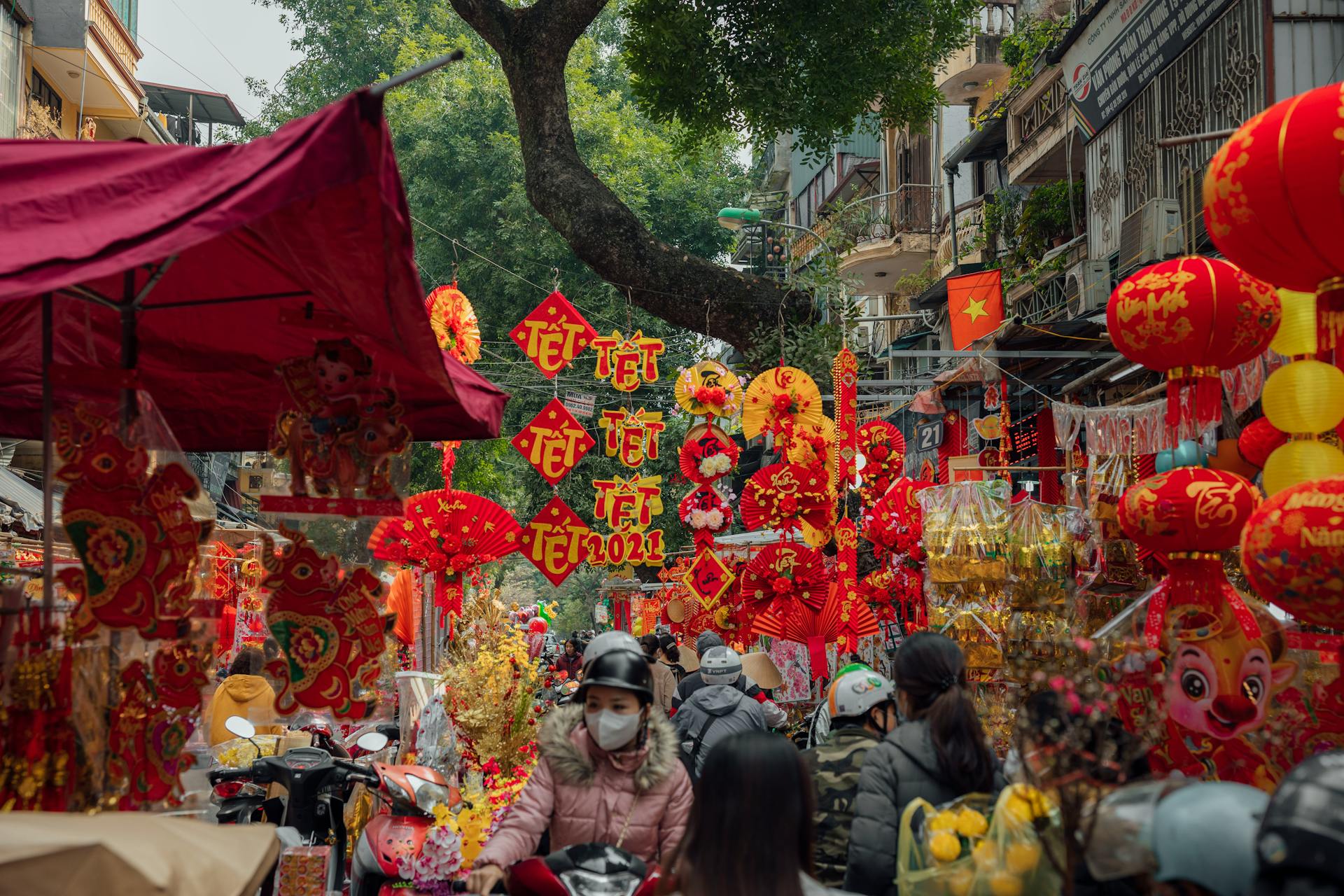
Trung Thu
Trung Thu (full name: Tết Trung Thu) is a mesmerizing night festival celebrating harvest and the innocence of children under the glow of lanterns.
Meaning
Literally translating to 'Mid-Autumn Festival', it captures the magic of the 15th day of the 8th lunar month, when the moon is at its brightest.
Origin
Over a millennium ago, it began as a moment for farmers to gaze at the moon to divine future crops. Today, it has evolved into a joyous festival dedicated to children and family bonding.
Cultural Significance
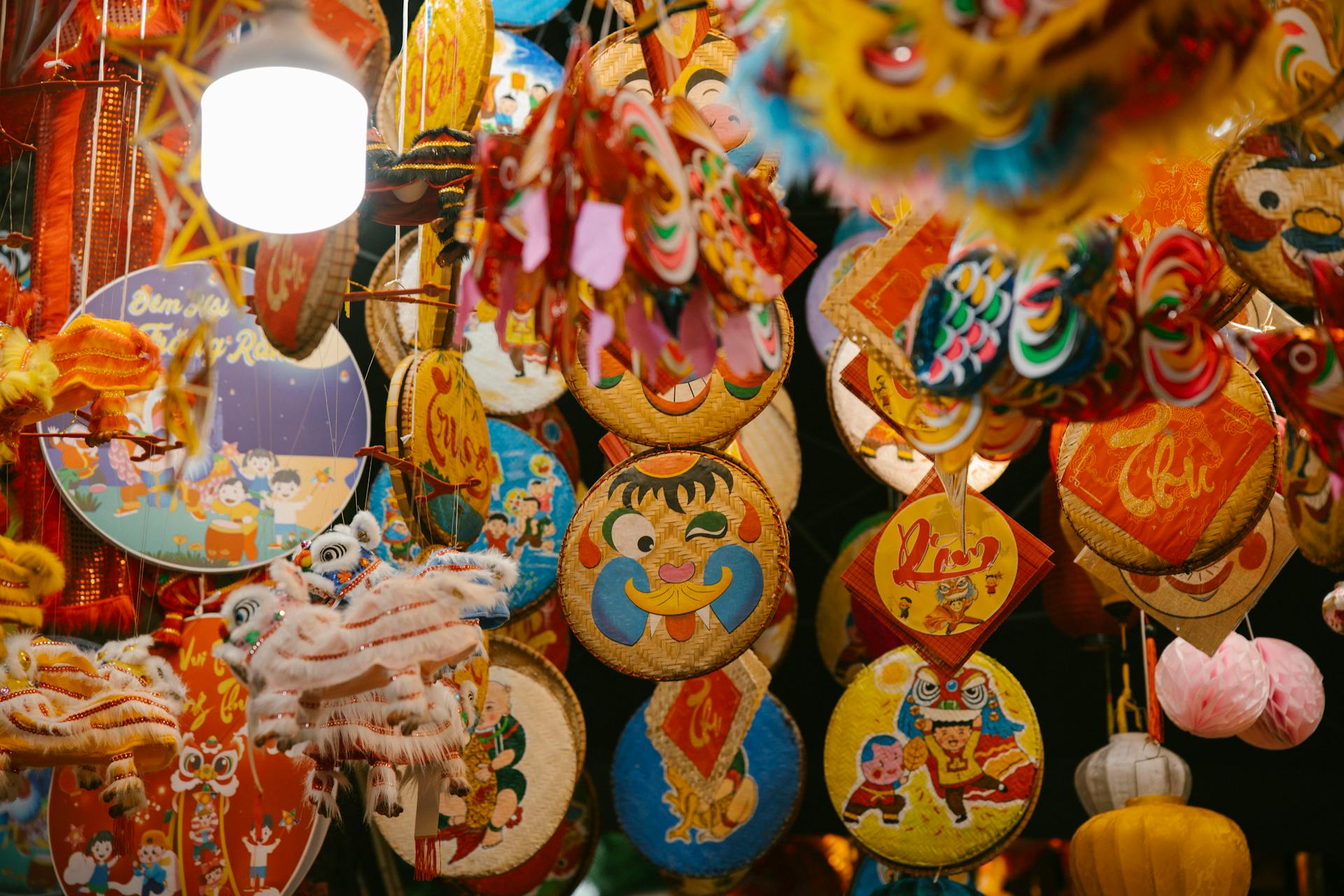
Unlike in many other cultures, the Vietnamese highlight the story of Chú Cuội, the man on the moon who floated away with a magical banyan tree. Children parade with star-shaped lanterns and watch Lion Dances (Múa Lân).
PRACTICE: Trung
To pronounce this sound, place the middle of your tongue against the roof of your mouth and produce a soft "ch" sound, similar to the beginning of "cheese" or "chair."
A deep 'oo' sound like in 'food' that finishes with the back of your tongue touching the back of your throat, like the 'ng' in 'song'. Keep your lips rounded.
Maintain a steady, flat, and level pitch throughout the word, keeping your voice relaxed and stable without letting it rise or fall.
PRACTICE: Thu
Like the English 't' in 'tea', but make sure to release a noticeable puff of air from your mouth.
Pronounce this sound like the long, smooth "oo" found in words like "zoo" or "flu."
Maintain a steady, flat, and level pitch throughout the word, keeping your voice relaxed and stable without letting it rise or fall.
EXAMPLES
Chúng tôi thường ăn bánh trung thu.
We usually eat mooncakes.
Trẻ em thích rước đèn trung thu.
Children like carrying mid-autumn lanterns.
WHAT TO AVOID
Many English speakers pronounce 'Thu' like the English 'th' in 'thin' or 'the'; it should be a 't' sound with a puff of air. The 't' at the end of 'Tết' should be a silent stop, not a loud 't' sound with air. Avoid pronouncing 'Trung' like 'Tr-ung' with a hard 'R'; in the North, it is more like 'Ch', and in the South, the tongue curls back without a vibrating 'R'.