Bánh mì
A masterclass in texture and balance, Bánh mì has evolved from its colonial roots into a globally celebrated culinary icon.
Meaning
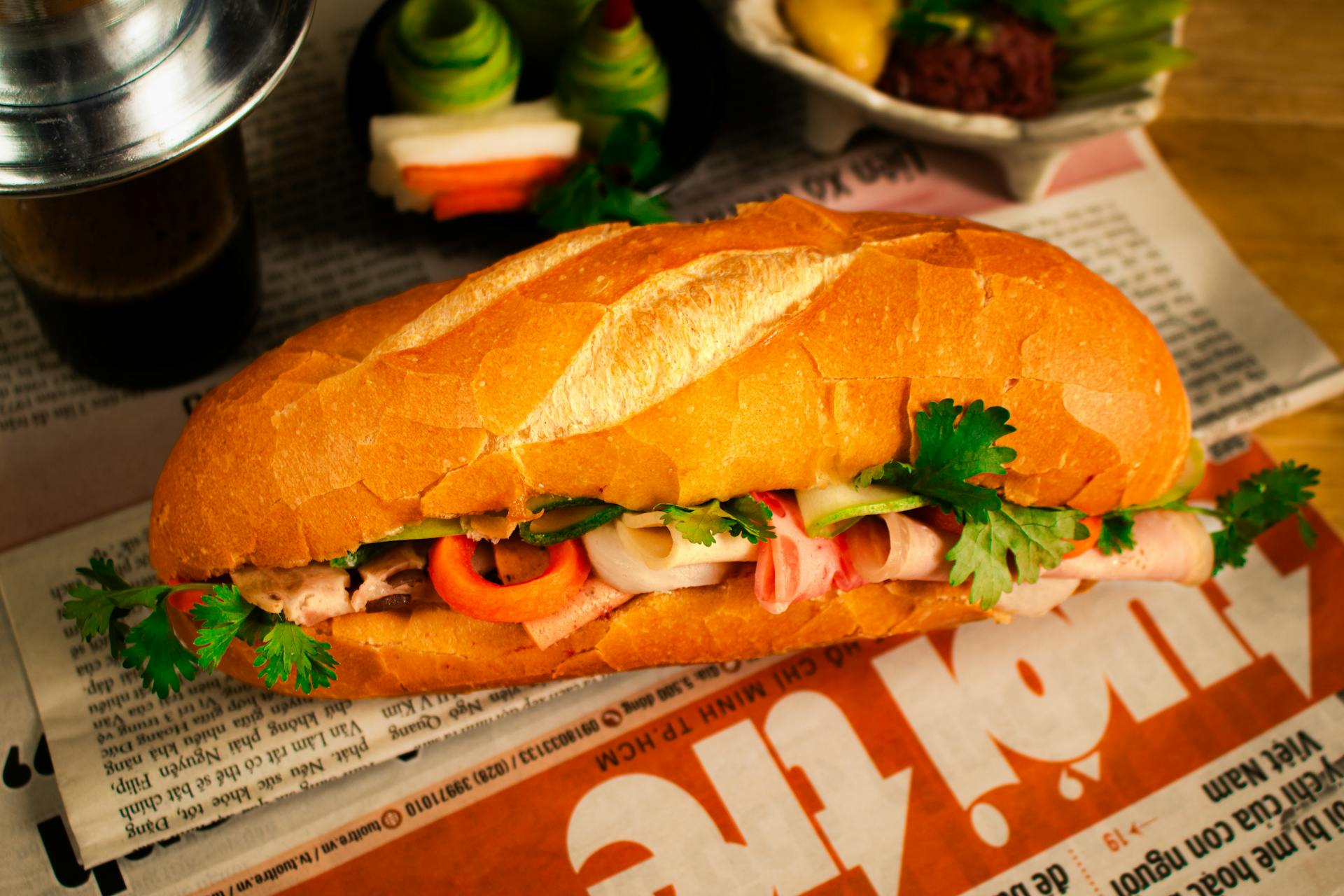
The term literally translates to 'wheat bread'. While 'bánh' covers most cakes and noodles, 'bánh mì' is now the worldwide name for the iconic stuffed sandwich.
Origin
The baguette arrived in Việt Nam via the French in the 19th century. Local bakers adapted the bread, using rice flour to make the crust crispier and the crumb airier, making it perfect for stuffing with local pâté, herbs, and pickles.
Cultural Significance
Bánh mì is the ultimate street food, enjoyed by people from all walks of life. The most famous varieties are often found in Sài Gòn and Hội An, sold from humble carts where families have perfected their secret sauces for generations.
PRACTICE: Bánh
The Vietnamese 'b' is close to the English 'b' in words like "boy" or "best," but not exactly the same. Press your lips together firmly, and as you release the sound, make it deeper and heavier in your throat — almost like you're gently swallowing the sound.
Start with a short 'ay' sound that quickly glides into the 'ng' in 'song'.
To master this rising tone, start at a medium pitch and quickly slide your voice upward, just as you would when asking a surprised or urgent question like "What?" or "Huh?".
PRACTICE: mì
Like the 'm' in the English word 'moon'.
Like the 'ee' in 'see'.
To produce this low-falling tone, start your voice at a low pitch and let it drop even further, mirroring the sound of a gentle, relaxed sigh of disappointment.
EXAMPLES
Bánh mì ở Việt Nam ngon lắm.
Bánh mì in Việt Nam is so good.
Tôi thường ăn bánh mì vào buổi sáng.
I often eat bánh mì in the morning.
Bánh mì này rất giòn.
This bánh mì is very crispy.
WHAT TO AVOID
Many English speakers try to rhyme 'bánh' with 'bang', but the vowel is the short 'a' sound. Another common mistake is pronouncing 'mì' with a flat English tone, making it sound like the word 'me' instead of using the heavy falling tone.